

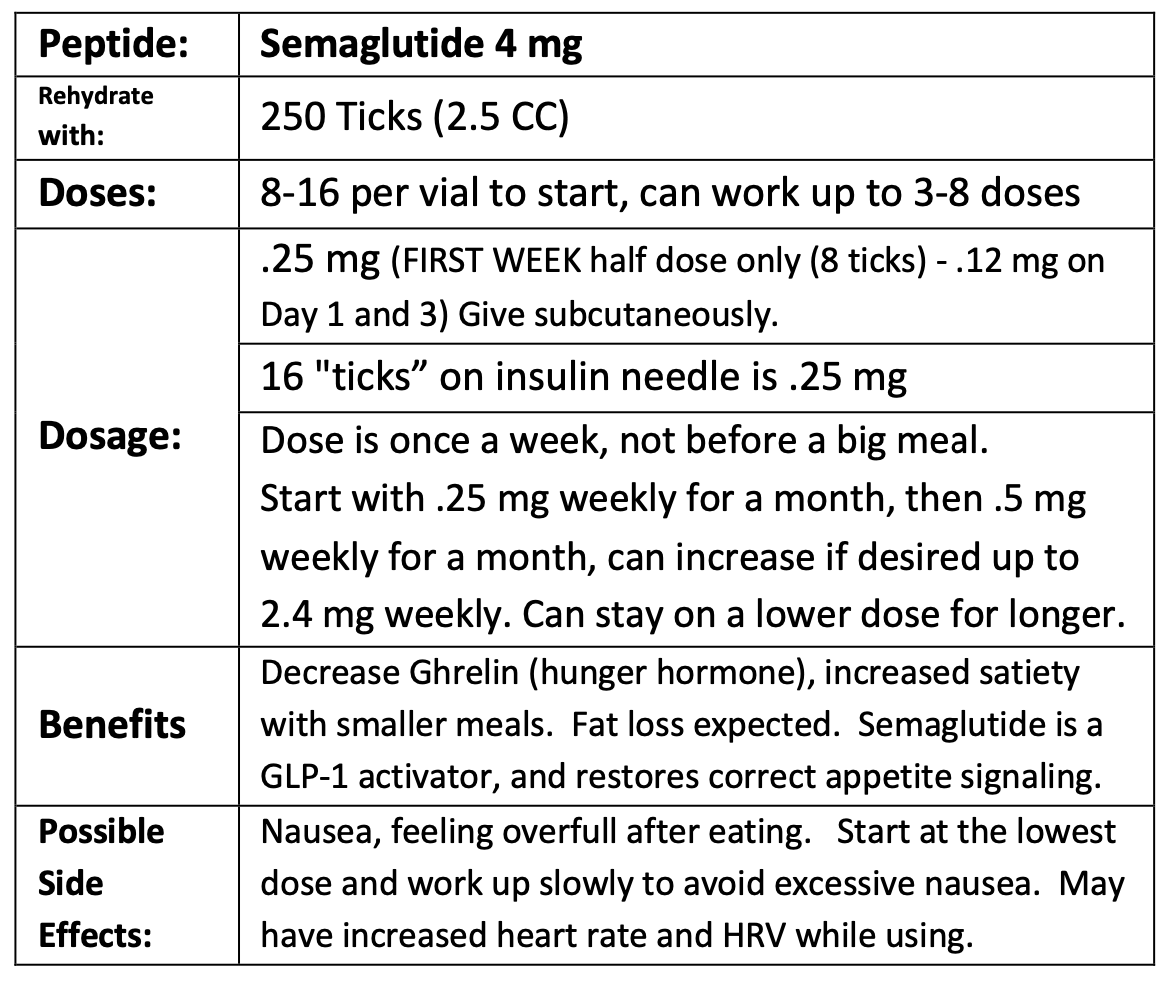
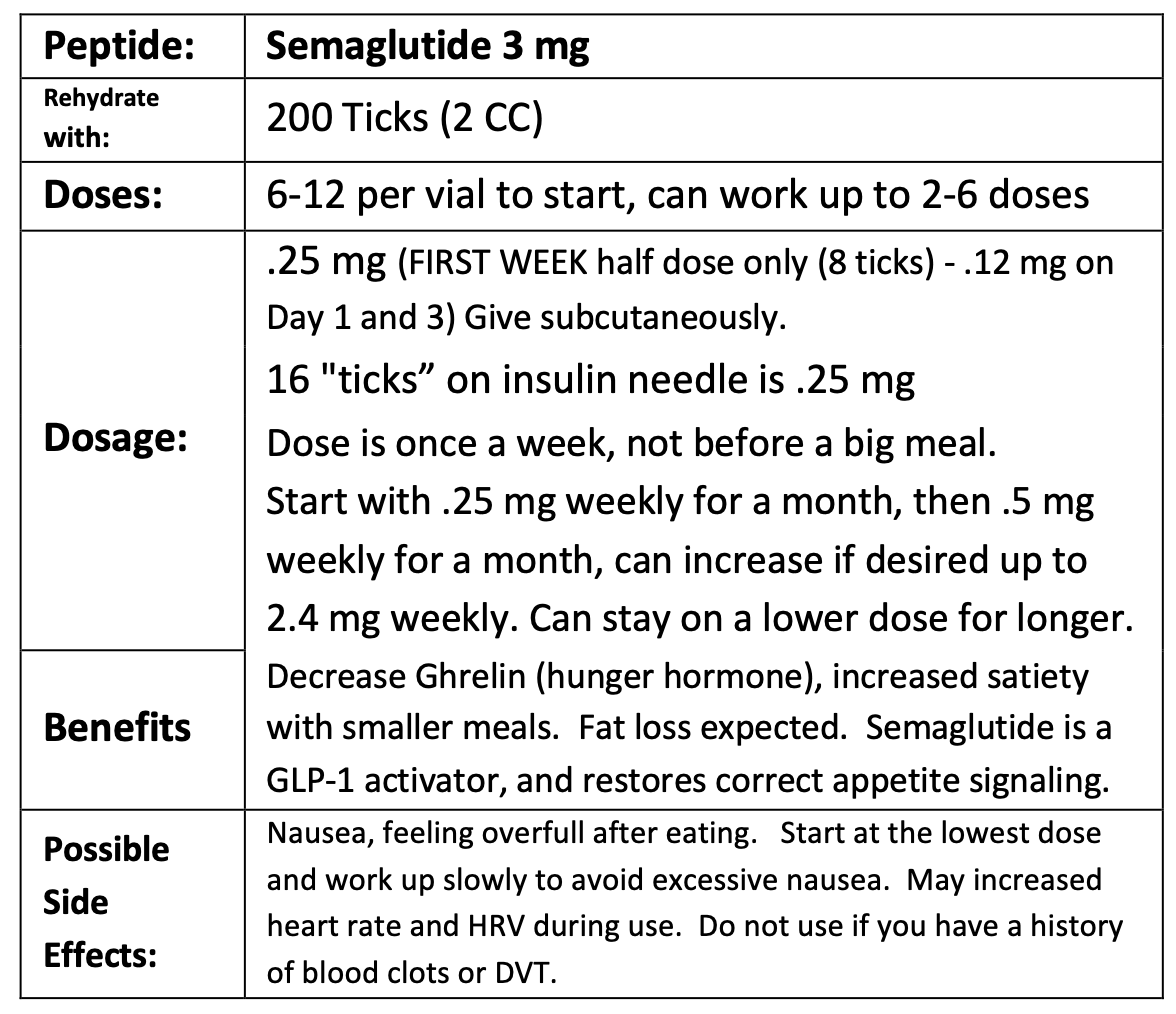
How is Semaglutide dosed?
What does it do?
Bottom line: you will eat less because you feel less hungry.
Semaglutide is a GLP-1 receptor agonist that affects ghrelin, the hunger hormone. It is especially helpful alongside intermittent fasting, and this is a good moment to start if you want to include it.
It also alters food and snack cravings, making it easier to stay away from carbs and sugar. Create new healthy eating habits in the process and the weight loss is more likely to stay off.
How long you stay on it is very individual.
Reported benefits
- Boosted metabolism
- Improved wound healing and injury repair
- GLP-1 receptor agonism affecting ghrelin
- FDA-approved for type 2 diabetes and for obesity
- Increases insulin secretion and inhibits glucagon from the pancreas, improving glucose metabolism
- Regulates hunger and delays gastric emptying
- Reduced cravings and suppressed appetite
- Weight loss plus significant improvement in HbA1c and cardiovascular risk scores
- May help with alcohol cravings
Trial result
The STEP 5 trial showed an average weight loss of 15% over two years.
How does it compare to tirzepatide and retatrutide?
| Compound | Agonism | Acts on | Weight loss in studies |
|---|---|---|---|
| Semaglutide (Ozempic) | Single | GLP-1 | ~15% at six months |
| Tirzepatide (Mounjaro) | Dual | GLP-1 + GIP | up to 23% |
| Retatrutide | Triple | GLP-1 + GIP + glucagon | over 30% |
Glucagon, the addition in retatrutide, burns more energy and raises metabolism rather than only reducing intake.
Semaglutide is the one with the longest track record and the most established safety profile, which is a reasonable argument for starting here rather than at the strongest option.
Side effects
- Constipation
- Diarrhoea
- Slowed gut motility
- Feeling overly full after a medium-sized meal
- Nausea
- Delayed gastric emptying
Dawn's two warnings, in her words:
DO NOT take if you have a history or family history of blood clots.
DO NOT take this peptide and then eat a huge meal later that day. Stick with smaller amounts until you are sure how it will affect you.
Recognised risks across this class include gallbladder disease, pancreatitis, and severe gastroparesis. Thyroid C-cell tumours appeared in rodent studies, which is why a personal or family history of medullary thyroid carcinoma or MEN2 is a contraindication. Anyone on insulin or a sulfonylurea risks hypoglycaemia in combination.
Do your own research.
The muscle loss question
Rapid weight loss on GLP-1 compounds includes lean mass, not only fat. Adequate protein and resistance training substantially change what is lost.
This is where nutrition does more than the compound does, and it is the part most people skip.
Test your foundations first
Eating considerably less means taking in fewer minerals at exactly the point tissue turnover accelerates. Magnesium, potassium, zinc and selenium are worth knowing about before starting rather than after symptoms appear.
See what the OligoScan measures
What this page does not tell you
- This is education, not a prescription. There is a legitimate route to semaglutide.
- Research chemical semaglutide is not the approved product.
- Not appropriate in pregnancy.
- Contraindicated with personal or family history of medullary thyroid carcinoma or MEN2.
- Anyone on diabetes medication needs supervision.
- Weight regain after discontinuation is well documented.
- If your relationship with food or your body is difficult, a compound that removes hunger is not a neutral tool. Worth a conversation with someone before starting.
References and further reading
- STEP 5 trial: two-year semaglutide results, Nature Medicine
- Comparison discussion across the three compounds: r/Mounjaro
- VIGEO Health Medical Disclaimer
Related
Questions and Answers
Q: How is Semaglutide dosed? A: Once weekly, starting with 0.12 mg, then 0.12 mg again two days later if there are no side effects. That split makes up the first week. Then 0.25 mg once weekly for a month, considering 0.5 mg for the following month, increasing monthly up to a maximum of 2.4 mg weekly. The half-life is five days.
Q: What is semaglutide? A: The active ingredient in Ozempic and Wegovy, and a single GLP-1 receptor agonist. It affects ghrelin, the hunger hormone, increases insulin secretion, inhibits glucagon from the pancreas, and delays gastric emptying. It is FDA-approved for type 2 diabetes and for obesity.
Q: How much weight is lost on semaglutide? A: The STEP 5 trial showed an average weight loss of 15% over two years. Study participants lost about 15% of body weight after six months. For comparison, tirzepatide participants lost up to 23% and retatrutide participants over 30%.
Q: What is the difference between semaglutide and tirzepatide? A: Semaglutide is a single agonist acting on GLP-1 only. Tirzepatide is a dual agonist combining GLP-1 with GIP, which is focused around the pancreas and appears to have a larger effect on body fat tissue. Retatrutide adds a third, glucagon, which raises metabolism.