

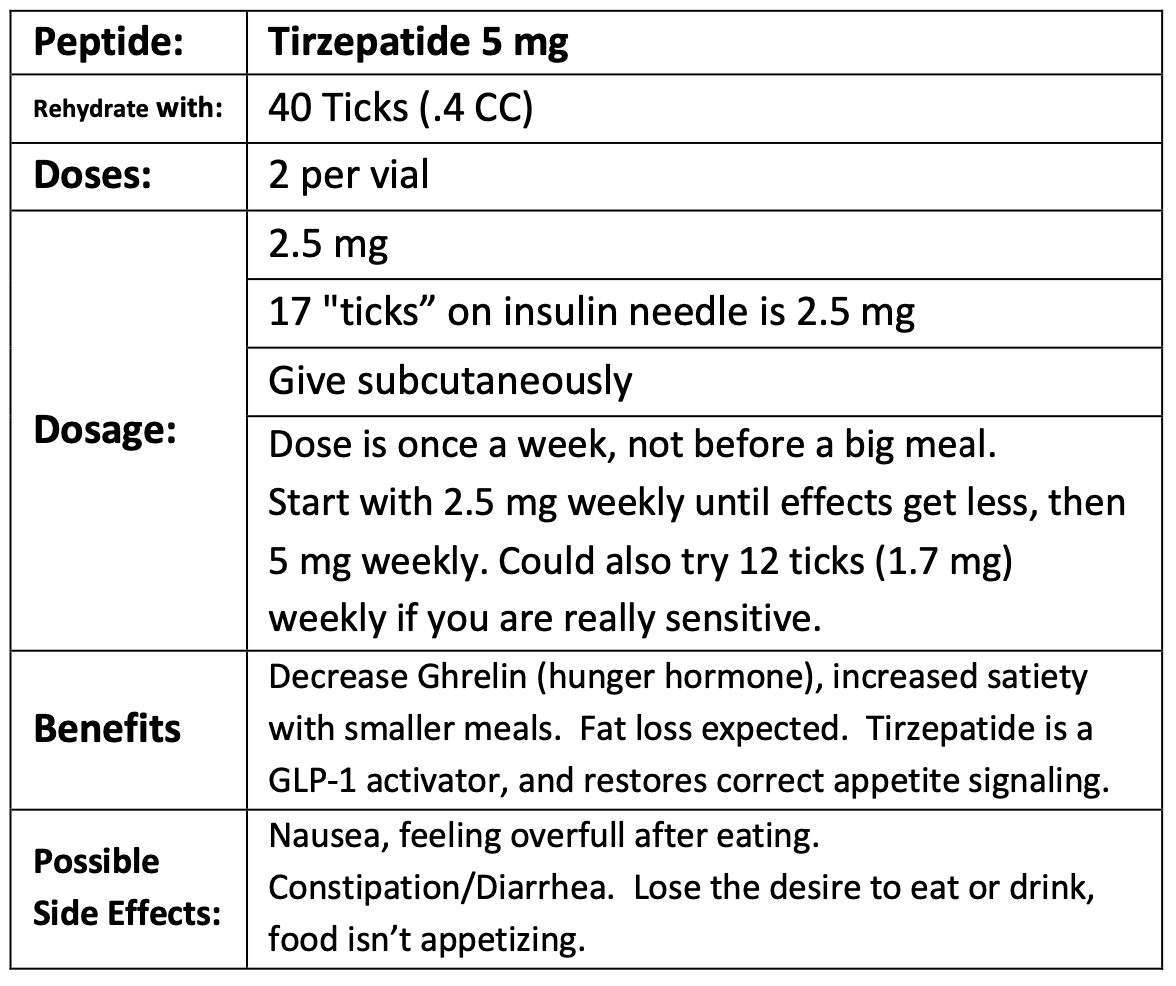
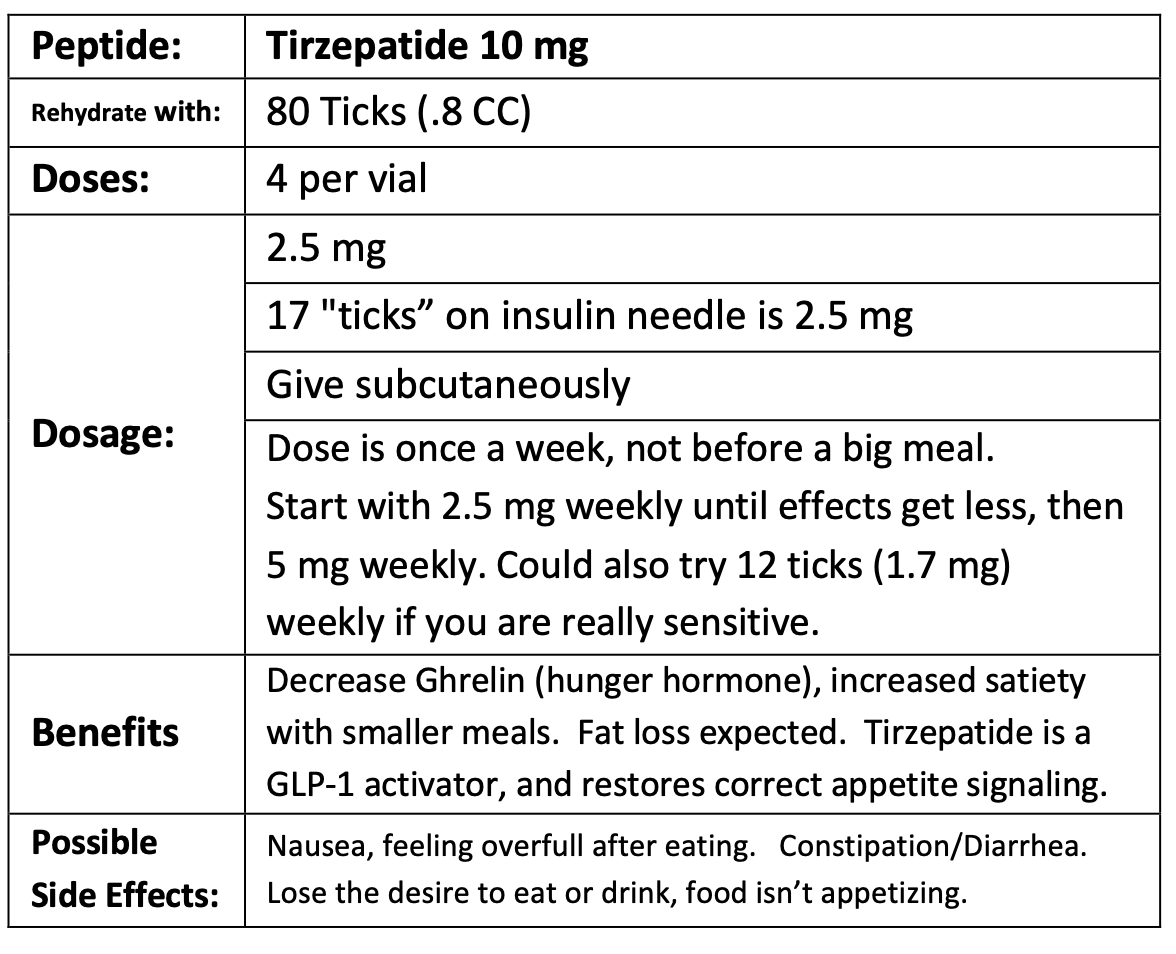
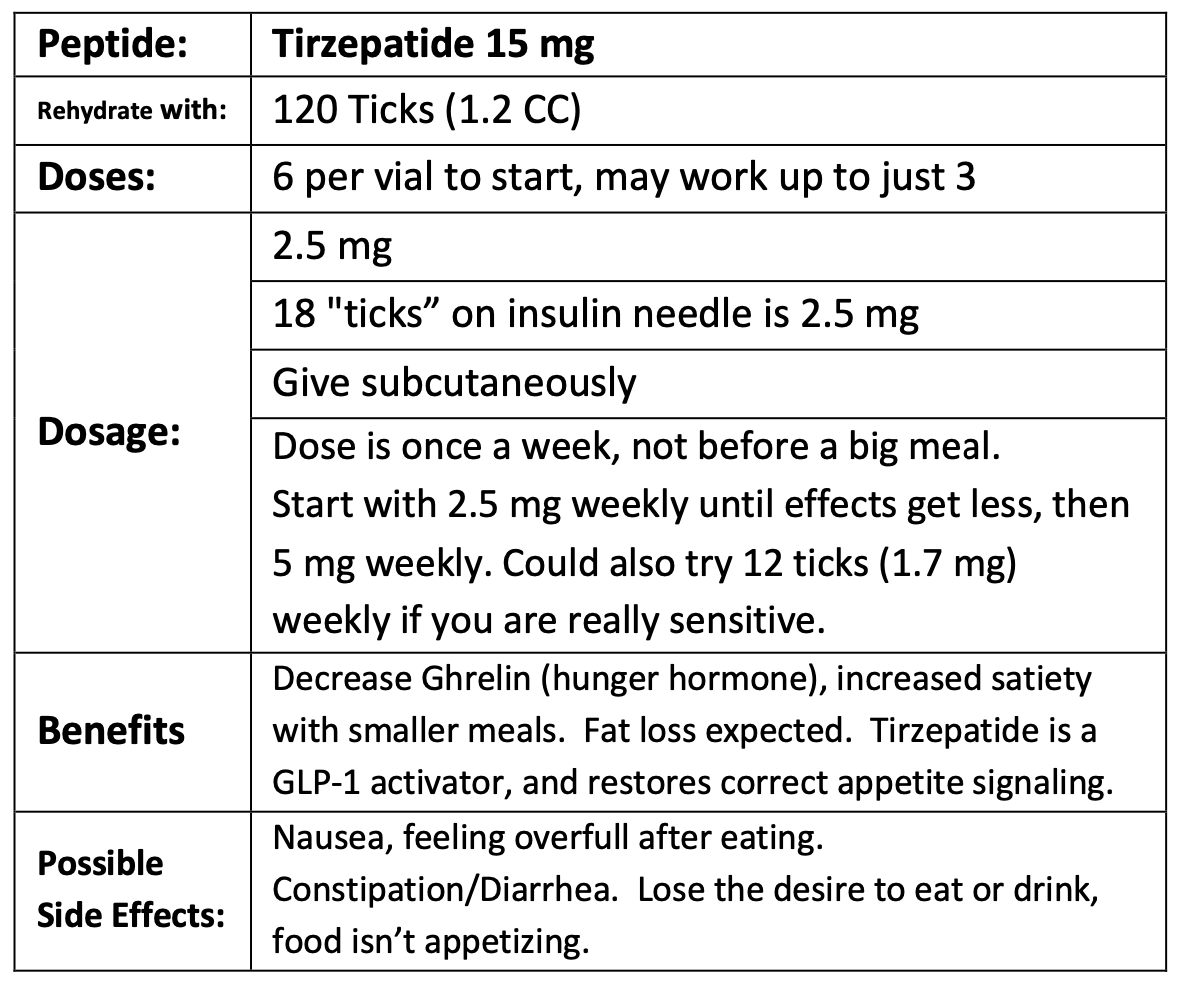
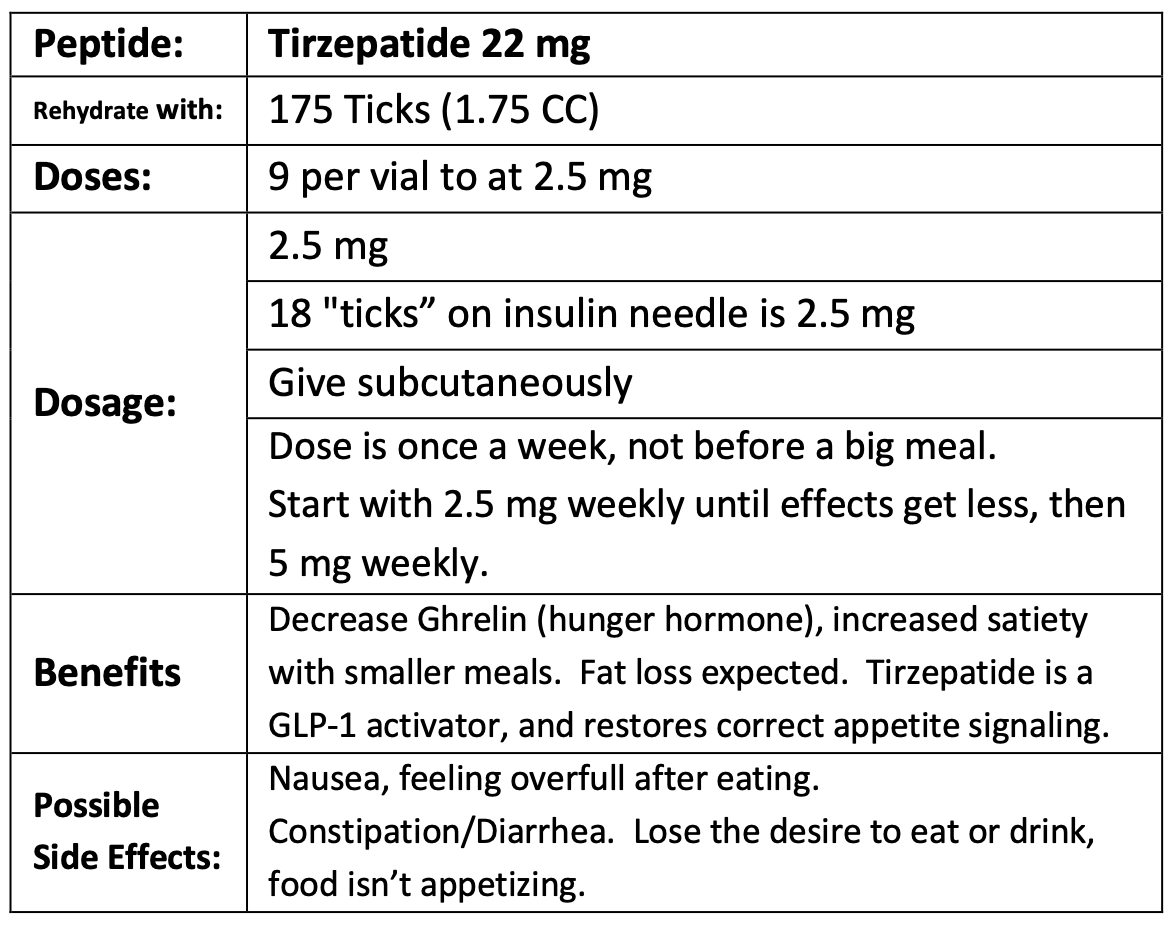
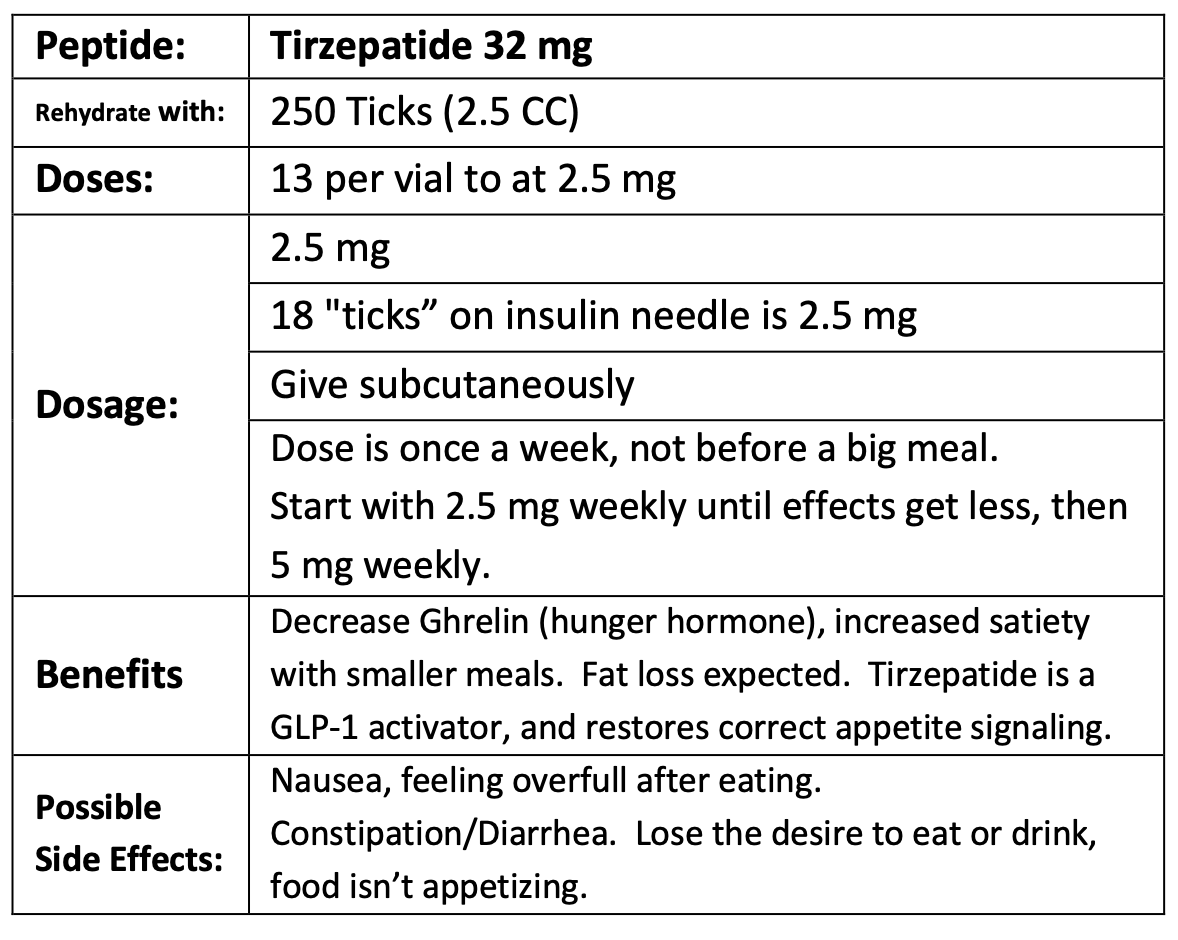
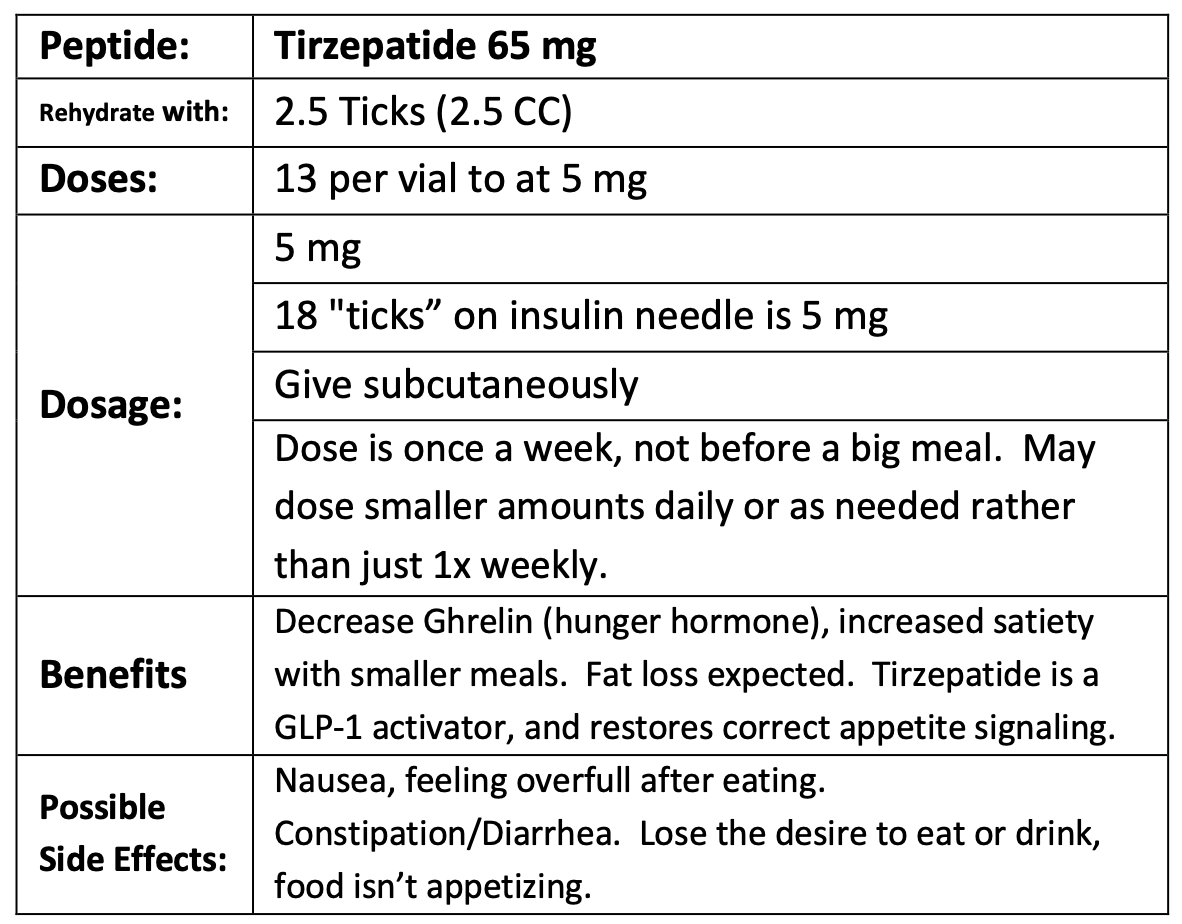
How is Tirzepatide dosed?
What makes tirzepatide different from semaglutide?
| Compound | Agonism | Acts on |
|---|---|---|
| Semaglutide (Ozempic) | Single | GLP-1 |
| Tirzepatide (Mounjaro) | Dual | GLP-1 + GIP |
| Retatrutide | Triple | GLP-1 + GIP + glucagon |
GIP is the addition. GLP-1 activity is systemic; GIP activity is focused primarily around the pancreas, and appears to have a larger effect on body fat tissue as well as regulating glucagon and insulin.
We cannot be 100% sure how both GIP and GLP-1 aid with weight loss. All we know is that tirzepatide does something to our metabolism in addition to decreasing caloric intake via increased satiety.
What are the reported benefits?
- Boosted metabolism
- GLP-1 receptor agonism affecting ghrelin, the hunger hormone
- GIP receptor effects on body fat tissue, glucagon and insulin regulation
- Weight loss plus significant improvement in HbA1c and cardiovascular risk scores
- Increased satiety, reducing caloric intake
- Controls appetite to the point that pleasure from food is lessened
- Helps eliminate snacking
Bottom line: you eat less because you feel less hungry. If you want to include intermittent fasting in a weight loss plan, this is a much easier time to start.
Trial results
The SURMOUNT 3 and 4 trials showed an average weight loss of 26% over roughly 18 months.
For comparison: semaglutide participants lost around 15% of body weight at six months, tirzepatide up to 23%, retatrutide over 30%.
Side effects
Far fewer side effects are seen with tirzepatide compared with semaglutide. Hunger cessation is also more obvious.
Still possible:
- Constipation
- Slowed gut motility
- Feeling overly full after a medium-sized meal
- Nausea
- Delayed gastric emptying
Do not take this peptide and then eat a large meal later the same day. Stick with smaller amounts until you know how it affects you.
If you already have pancreatitis, you cannot take tirzepatide. If you notice it developing, stop and seek immediate medical attention.
Gallbladder disease is a recognised risk across this class. So is severe gastroparesis. Thyroid C-cell tumours appeared in rodent studies, which is why a personal or family history of medullary thyroid carcinoma or MEN2 is a contraindication. Anyone taking insulin or a sulfonylurea risks hypoglycaemia in combination.
Do your own research.
On "an alternative to bariatric surgery"
Tirzepatide is sometimes discussed as an alternative to bariatric surgery because trial results have produced substantial weight loss. The comparison isn't exact: surgery is a one-time intervention, while these compounds generally require ongoing use and weight regain after stopping is well documented.
That decision belongs with a bariatric physician, weighing your history, comorbidities and long-term plan. It is not a decision to reach from a blog post in either direction.
The muscle loss question
Rapid weight loss on incretin agonists includes lean mass, not only fat. At 26% total body weight, that proportion matters.
Adequate protein and resistance training substantially change what is lost. This is where nutrition does more than the compound does, and it is the part most people skip.
Test your foundations first
Eating considerably less means taking in fewer minerals, at exactly the point when tissue turnover is accelerating. Magnesium, potassium, zinc and selenium are worth knowing about before starting rather than after symptoms appear.
See what the OligoScan measures
What this page does not tell you
- This is education, not a prescription. Tirzepatide is a prescription medication and there is a legitimate route to obtaining it.
- Research chemical tirzepatide is not the approved product and carries none of its manufacturing guarantees.
- Not appropriate in pregnancy, and pregnancy should be excluded before starting.
- Contraindicated with a personal or family history of medullary thyroid carcinoma or MEN2.
- Anyone on diabetes medication needs supervision because of hypoglycaemia risk in combination.
- Weight regain after discontinuation is well documented. This is not a short course with a permanent result.
- If your relationship with food or your body is difficult, a compound that removes hunger and lessens the pleasure of eating is not a neutral tool. Worth a conversation with someone before starting.
References and further reading
- Summary of SURMOUNT 3 and 4 trials, Eli Lilly
- Tirzepatide side effects, Drugs.com
- Comparison discussion across the three compounds: r/Mounjaro
- VIGEO Health Medical Disclaimer
Related
Questions and Answers
Q: How is Tirzepatide dosed? A: Once weekly, starting at 2.5 mg for at least four weeks, moving to 5 mg if effects diminish. The half-life is five days so effects build as the compound accumulates. While 15 mg weekly is possible, significant benefit with fewer side effects has been shown by staying at lower doses for longer.
Q: What is the difference between tirzepatide and semaglutide? A: Tirzepatide is a dual agonist acting on both GLP-1 and GIP receptors, while semaglutide is a single agonist acting on GLP-1 only. GLP-1 activity is systemic; GIP activity is focused primarily around the pancreas and appears to have a larger effect on body fat tissue as well as regulating glucagon and insulin.
Q: How much weight is lost on tirzepatide? A: The SURMOUNT 3 and 4 trials showed an average weight loss of approximately 26% over around 18 months. For comparison, semaglutide participants lost about 15% of body weight at six months and retatrutide participants over 30%.
Q: Who should not take tirzepatide? A: Anyone with existing pancreatitis, anyone with a personal or family history of medullary thyroid carcinoma or MEN2, and anyone pregnant. Those taking insulin or sulfonylureas need medical supervision because of hypoglycaemia risk. Gallbladder disease and severe gastroparesis are recognised risks across this drug class.