

How is retatrutide dosed?
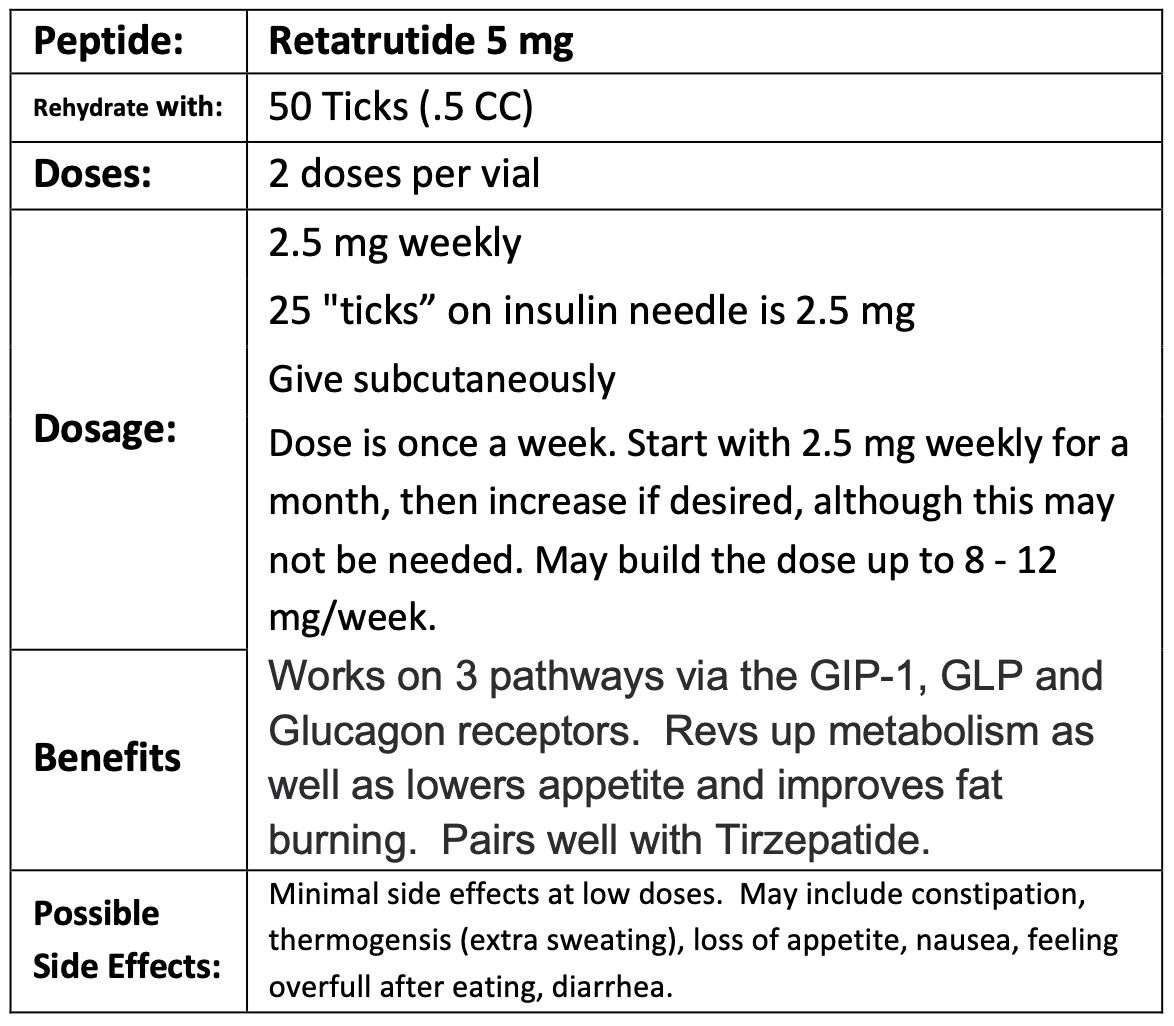
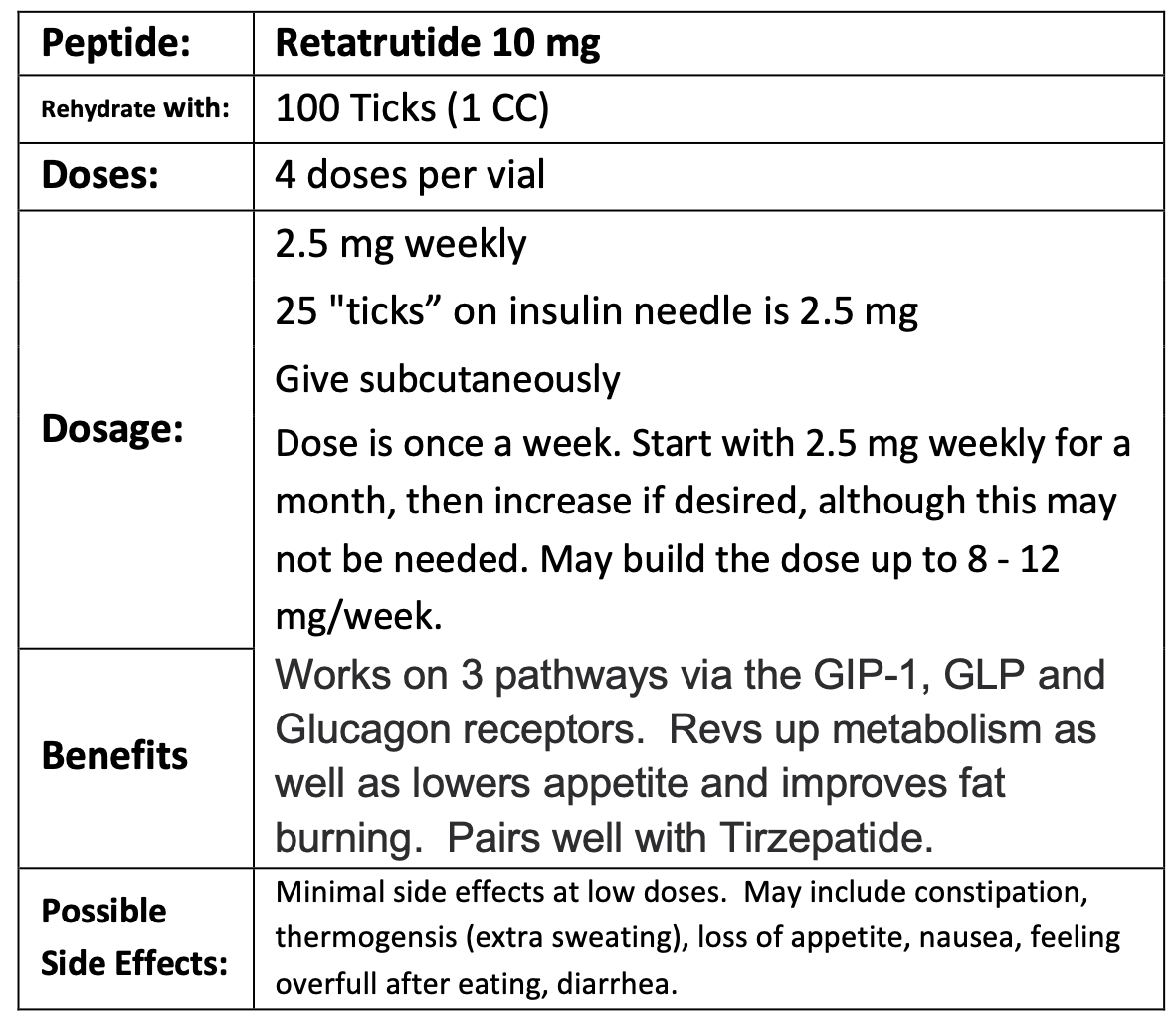
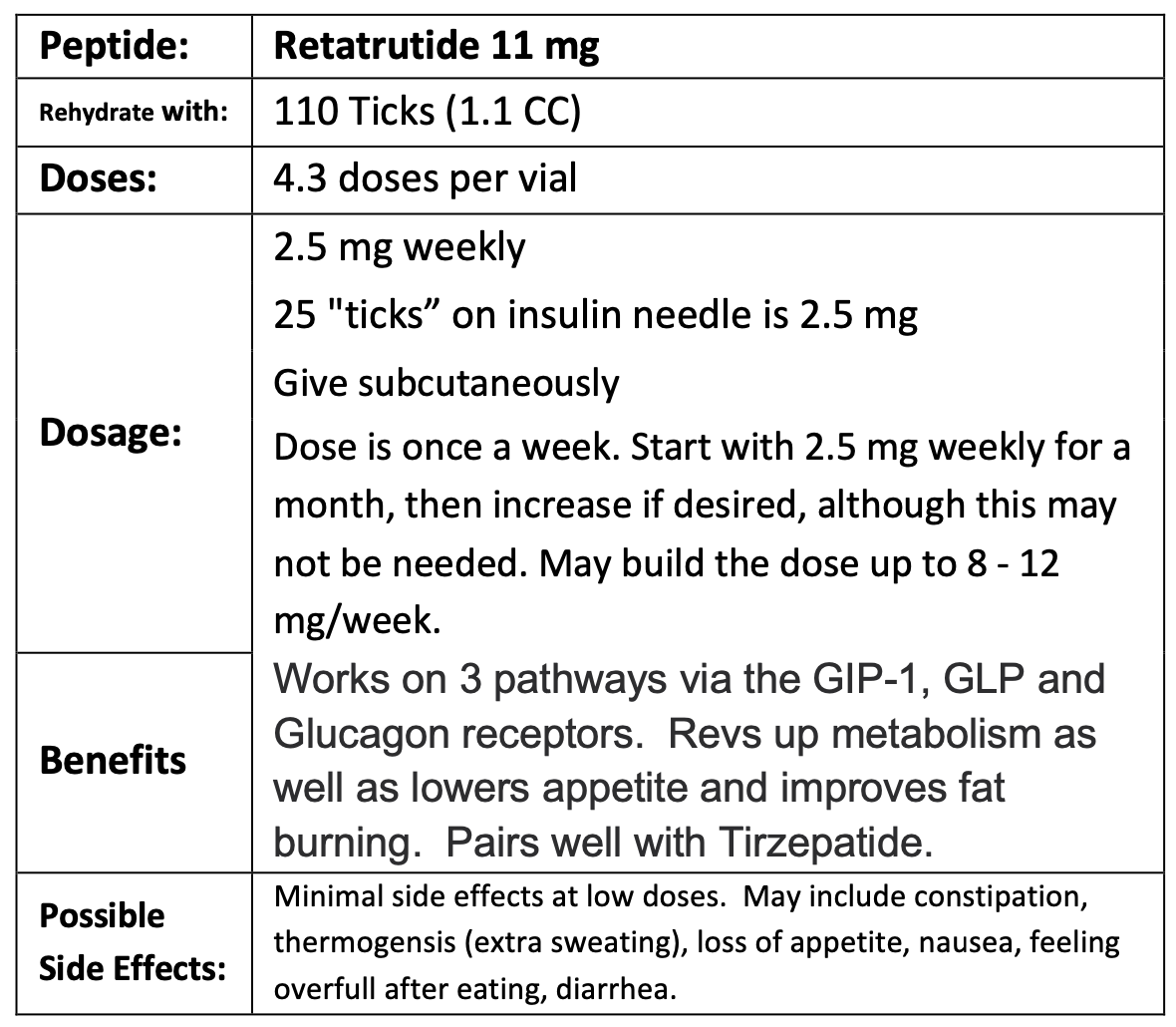
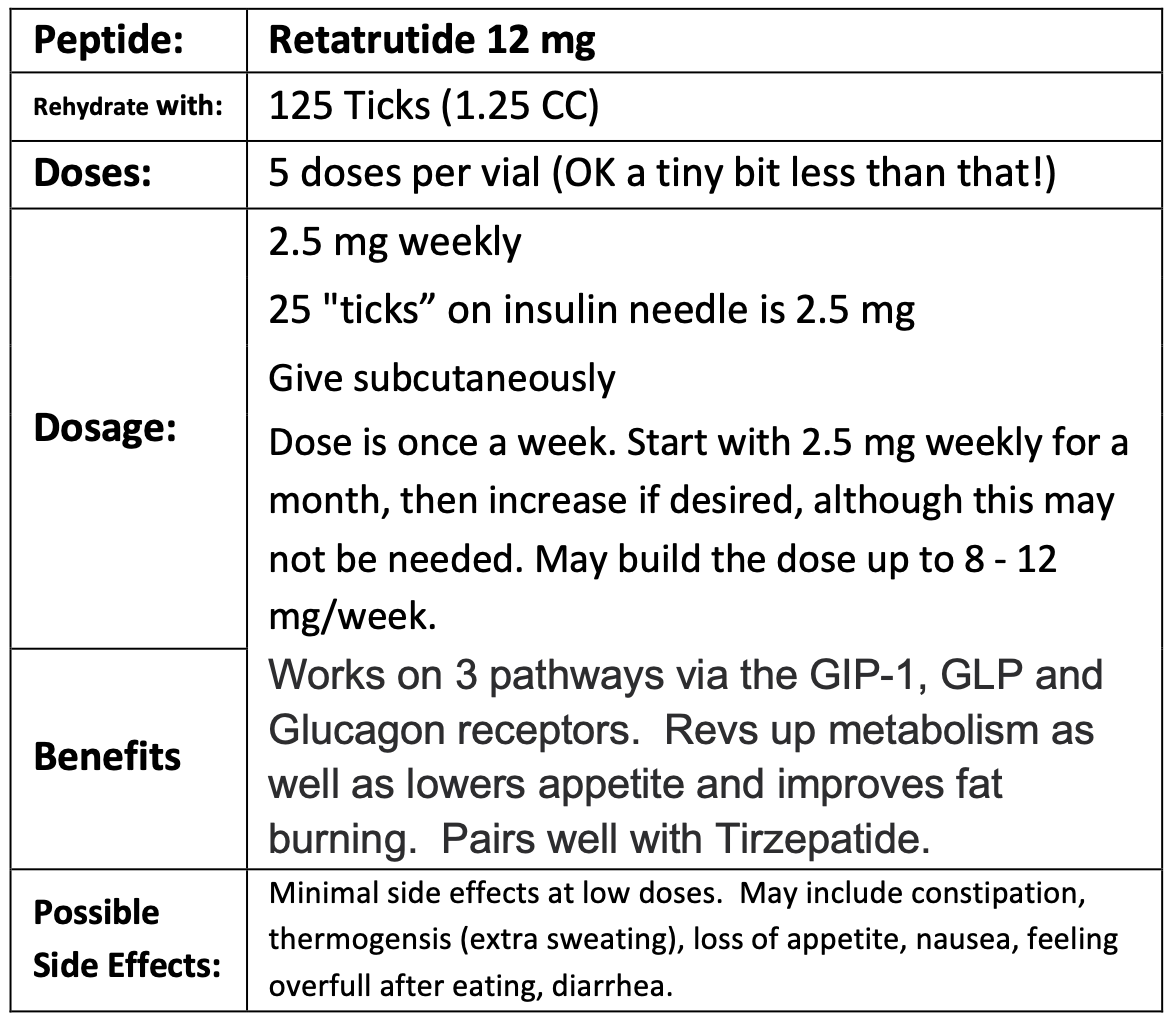
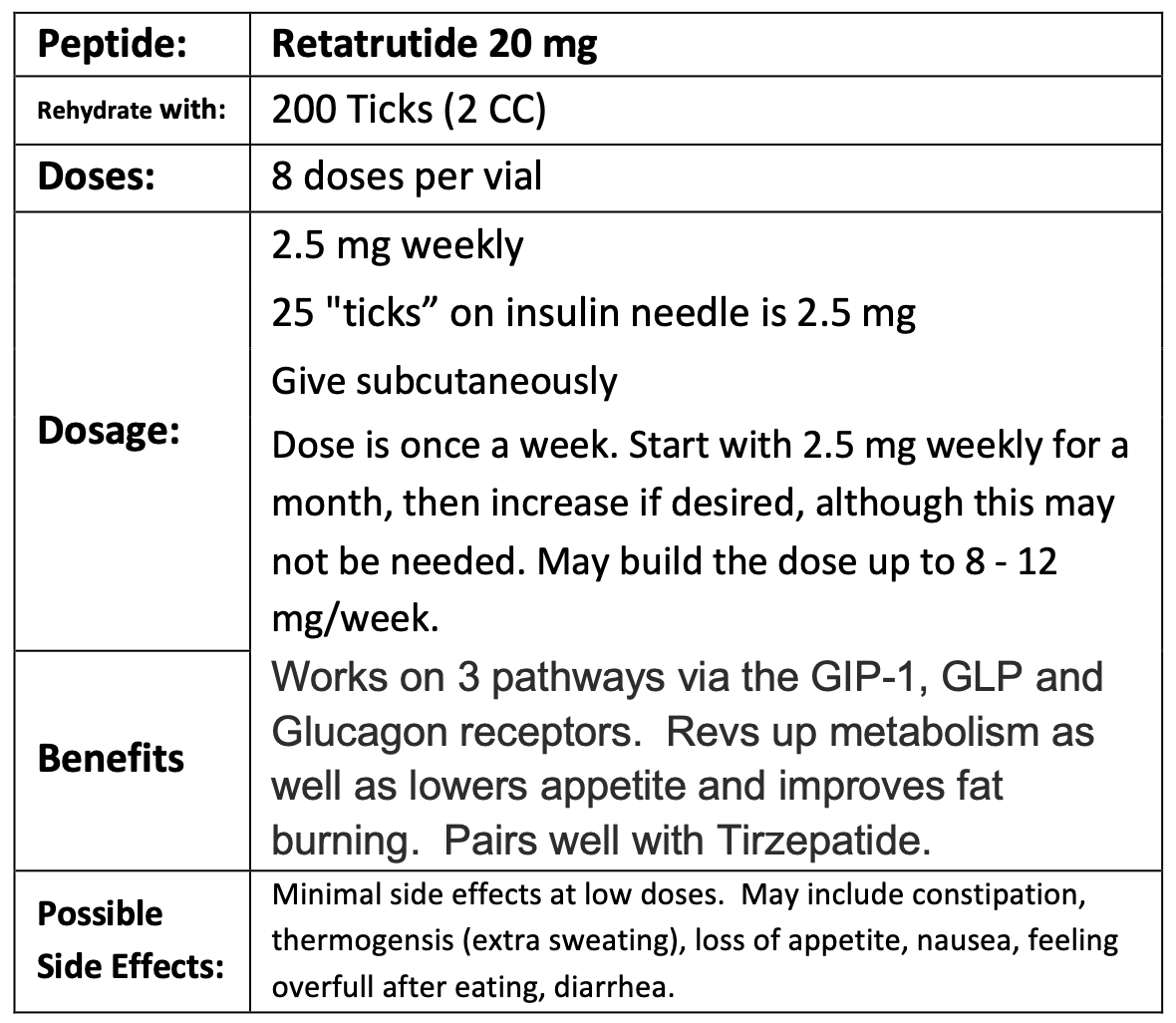
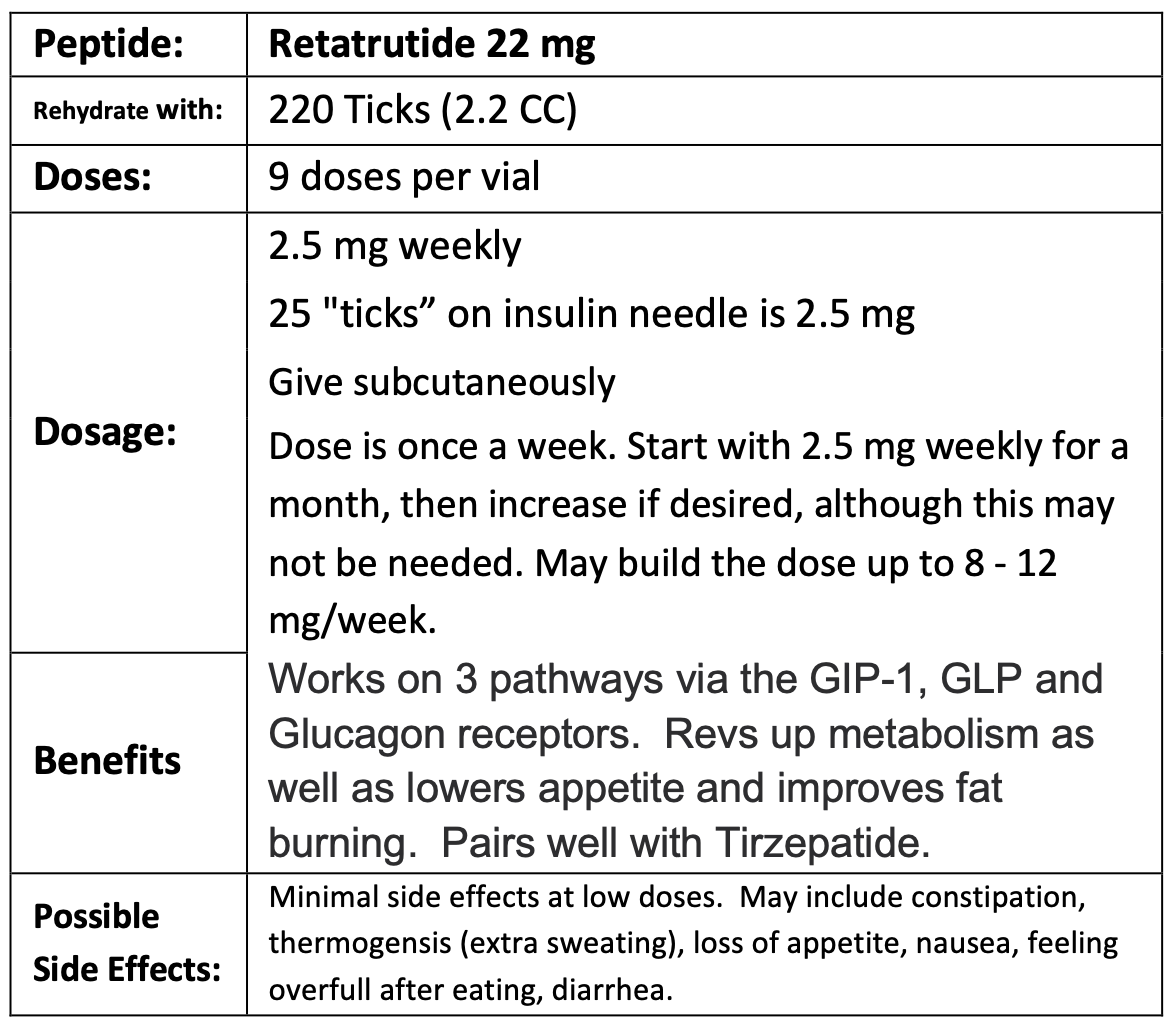
Dawn's position on titration is the useful part here. While it is possible to build up to 12 mg weekly, it usually is not desired or needed. Significant benefits with fewer side effects have been shown at lower doses maintained over a longer period.
That is worth emphasising because the trial data below shows a dose-response curve, and the obvious conclusion from a chart is "take more." The clinical experience points the other way: stay lower, stay longer.
On combining with tirzepatide
The original notes retatrutide can be combined with low doses of tirzepatide for greater appetite reduction.
Treat that as a supervised-only proposition. Stacking two incretin agonists compounds gastrointestinal effects, and the combination has not been studied. Anyone on diabetes medication in particular risks hypoglycaemia. This is not a self-directed adjustment.
What is retatrutide?
A triple agonist. It acts on three receptor pathways at once:
| Compound | Agonism | Acts on |
|---|---|---|
| Semaglutide (Ozempic) | Single | GLP-1 |
| Tirzepatide (Mounjaro) | Dual | GLP-1 + GIP |
| Retatrutide | Triple | GLP-1 + GIP + glucagon |
The glucagon action is the difference. Glucagon burns more energy and raises metabolism. The other two primarily reduce intake. Retatrutide does both.
Bottom line: you eat less because you feel less hungry. It affects ghrelin, the hunger hormone. If you want to include intermittent fasting in a weight loss plan, this is a much easier time to start.
What do the trials show?
Phase 1: participants lost 9 kg in 12 weeks. Tirzepatide trial participants took 40 weeks to lose the same amount.
Phase 2, change in body weight at 48 weeks:
| Dose | Weight change |
|---|---|
| 1 mg | −8.7% |
| 4 mg | −17.1% |
| 8 mg | −22.8% |
| 12 mg | −24.2% |
| Placebo | −2.1% |
Participants also reduced HbA1c, blood pressure, and cholesterol.
Liver fat decreased by over 80% at 48 weeks, against 4.6% in the placebo group. This is the NAFLD finding, and it is the result that most interests clinicians rather than dieters.
Comparison across the three
| Compound | Body weight reduction in studies |
|---|---|
| Semaglutide | ~15% at six months |
| Tirzepatide | up to 23% |
| Retatrutide | over 30% |
Side effects
Mostly mild to moderate, and less intense at lower doses:
- Nausea
- Diarrhoea
- Vomiting
- Constipation
- Increased heart rate
- Increased sweating
- Skin tingling
Study dosages ranged from 2 mg to 12 mg per week.
Two additions worth having. Increased heart rate is a class effect across incretin agonists and was a consistent trial finding, so it deserves attention rather than being read as minor. And the class carries recognised risks not listed above, including pancreatitis, gallbladder disease, severe gastroparesis, and thyroid C-cell tumours in rodent studies. Those apply to retatrutide as a matter of class, whatever its individual trial record shows.
Do your own research.
The muscle loss question
Rapid weight loss on incretin agonists includes lean mass, not only fat. At the magnitude these compounds produce, that is a meaningful proportion.
This is where nutrition actually matters more than the peptide. Adequate protein and resistance training substantially change the composition of what is lost. Someone dropping 24% of body weight without either is losing muscle they will want back.
Test your foundations first
Rapid weight loss increases mineral demand and reduces intake at the same time, which is a poor combination. Eating considerably less means taking in fewer minerals, while tissue turnover accelerates.
Magnesium, potassium, zinc and selenium are all worth knowing about before starting rather than after symptoms appear.
See what the OligoScan measures
What this page does not tell you
- Retatrutide is not approved anywhere. Material in circulation outside clinical trials comes from unregulated research chemical suppliers.
- The trial results were produced under medical supervision with pharmaceutical-grade material and monitoring. Independent use is a different situation.
- This is not appropriate in pregnancy, and pregnancy should be excluded before starting.
- Not for anyone with a personal or family history of medullary thyroid carcinoma or MEN2, which is a contraindication across this class.
- Anyone on diabetes medication needs medical supervision. Combining incretin agonists with insulin or sulfonylureas risks hypoglycaemia.
- This page is not weight loss advice. If your relationship with food or your body is difficult, a compound that removes hunger is not a neutral tool, and that is a conversation worth having with someone before starting.
- Long-term safety data does not exist. Phase 3 is ongoing.
References and further reading
- Phase 1 clinical trials, NAFLD resolution: hcplive.com
- Phase 2 clinical trials coverage: prevention.com
- Research report: Cell Metabolism
- Comparison discussion across the three compounds: r/Mounjaro
- VIGEO Health Medical Disclaimer
Related
Questions and Answers
Q: How is retatrutide dosed? A: Once weekly, starting at 1 to 2 mg for at least four weeks. The half-life is five days, so effects build as the compound accumulates. Doses are increased only if effects diminish. While trials went to 12 mg weekly, significant benefit with fewer side effects has been shown by staying at lower doses for longer.
Q: What is the difference between retatrutide, tirzepatide and semaglutide? A: The number of receptor pathways each acts on. Semaglutide is a single agonist acting on GLP-1. Tirzepatide is a dual agonist combining GLP-1 with GIP. Retatrutide is a triple agonist adding glucagon, which raises metabolism and burns more energy rather than only reducing appetite.
Q: How much weight did people lose on retatrutide in trials? A: In Phase 2 at 48 weeks, participants lost 8.7% of body weight at 1 mg, 17.1% at 4 mg, 22.8% at 8 mg and 24.2% at 12 mg, against 2.1% on placebo. Liver fat decreased by over 80%, compared with 4.6% on placebo. HbA1c, blood pressure and cholesterol also improved.
Q: Is retatrutide approved? A: No. It is an Eli Lilly investigational compound that has completed Phase 2 and entered Phase 3, with no regulatory approval in the United States, the EU or elsewhere. Unlike semaglutide and tirzepatide, it has no legitimate pharmacy supply, so material in circulation comes from unregulated research chemical suppliers.