
Start with Healing With Voltage
New to this subject? Begin with Healing With Voltage.
Tennant’s larger framework asks readers to think about the body through voltage, polarity, meridians, and resistance in biological circuits. Cancer and Polarity is where he brings historical cancer theories into that larger picture.
The progression is worth following carefully:
Nobuto Yamamoto and Nagalase
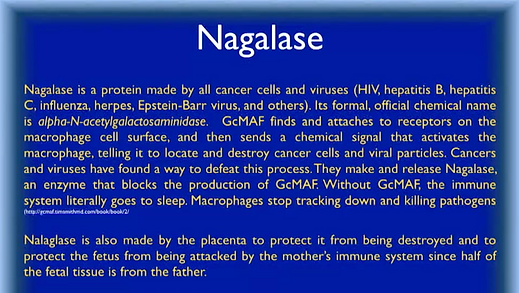
Nobuto Yamamoto wrote about nagalase, also called alpha-N-acetylgalactosaminidase activity, in relation to vitamin-D-binding protein or Gc protein, macrophage-activating-factor biology, viruses, immune activity, and cancer.
In a 2006 laboratory paper, Yamamoto reported biochemical and cell-culture findings that he interpreted as connecting HIV-envelope-associated nagalase activity with Gc-protein deglycosylation and reduced macrophage-activating-factor precursor activity. In later small cancer reports, his group interpreted falling serum nagalase after GcMAF administration as evidence of tumor regression.
Those later breast-cancer and colorectal-cancer reports are marked as retracted in PubMed. Yamamoto is included because his work was part of the historical material that interested Tennant, not because the reports establish a universal cancer mechanism or cancer-treatment plan.
Why Did Tennant Find This Interesting?
Tennant’s model looks for things that may interrupt normal cellular repair, immune activity, or electrical balance. Yamamoto’s work on nagalase, Gc protein, and macrophage activity gave Tennant another historical lens through which to think about cancer, viruses, immune function, and cellular terrain.
That is an interpretation within Tennant’s model. It does not mean that nagalase is a validated universal tumor marker or that an individual result proves tumor burden or eradication.
John Beard and the Enzyme Theory of Cancer
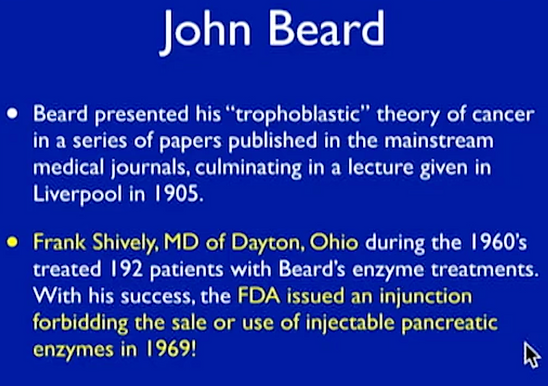
In 1902, British embryologist John Beard proposed an embryological explanation for carcinoma. Beard compared early trophoblast, the invasive cell layer involved in establishing the placenta, with malignant tissue. He was interested in the way early trophoblast attaches, invades tissue, and helps establish a blood supply.
Beard then made a further connection. He believed that around the time fetal pancreatic function begins, pancreatic proteolytic enzymes such as trypsin may help restrain trophoblast invasion. He extended that historical hypothesis to cancer and proposed that pancreatic enzymes might act against cancer cells.
Beard’s trophoblast analogy and enzyme theory are historical hypotheses, not established oncology. Trophoblast invasion and pancreatic-protease physiology are real biological subjects, but this does not make ordinary cancers trophoblastic tissue or establish trypsin as a cancer treatment.
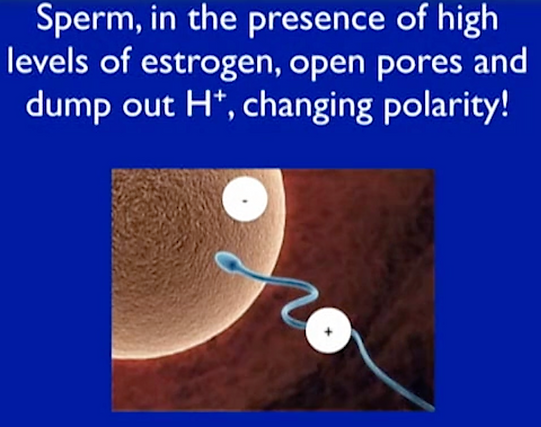
Why Does Tennant Connect Beard to His Model?
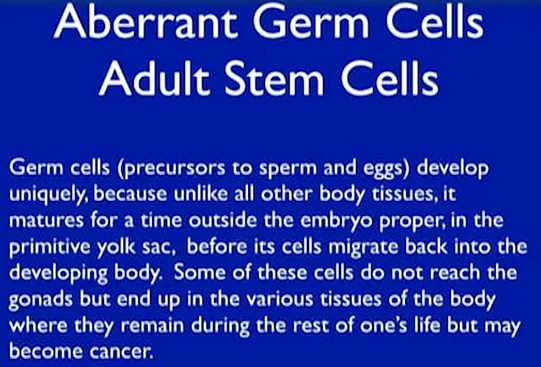
Tennant is interested in Beard because Beard’s theory gives him a historical bridge between developmental biology, tissue invasion, enzymes, cellular repair, and cancer. Tennant then adds his own voltage and polarity interpretation to that bridge.
Why Does Tennant Compare Cancer with Placental Growth?
A placenta is obviously not cancer. But placental and trophoblast tissue has characteristics that have historically interested cancer researchers: rapid growth, tissue invasion, vascular development, changing oxygen conditions, and immune interactions.
Normal placentation is a timed and tightly regulated process. Trophoblast invasion is coordinated with spiral-artery remodeling, vascular growth, oxygen transitions, and maternal-fetal immune adaptation. Cancer can share isolated biological motifs such as migration, extracellular-matrix remodeling, angiogenic signaling, adaptation to low oxygen, and immune modulation, but malignant growth is dysregulated, persistent, and tissue-specific.
Tennant’s interpretation adds fertilization, polarity, estrogen, electrical charge, placental growth, and cancer to the conversation. That is Tennant’s interpretive connection, not a claim that cancer is literally a placenta or that one electrical pattern explains every cancer.
What Is Polarity?
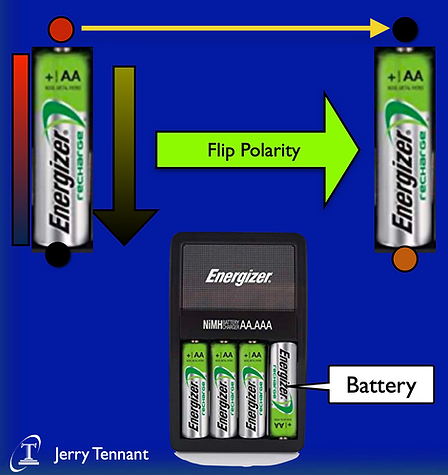
Think of a rechargeable battery.
A rechargeable battery has positive and negative poles. Within Tennant’s model, the body’s biological circuits also depend upon appropriate electrical polarity. He proposes that when a circuit loses adequate voltage or reverses polarity, normal repair and regulation become more difficult.
Cells do have measurable membrane potentials based on ion gradients and transport across membranes. Tennant’s additional proposition, that an organ circuit or meridian can flip polarity in a way that drives chronic disease, belongs to his Healing Is Voltage framework.
Follow the Polarity Conversation
Polarity is easier to understand when you see how Tennant connects it with body voltage, meridians, and scalar energy.
The Oxygen-Voltage Connection
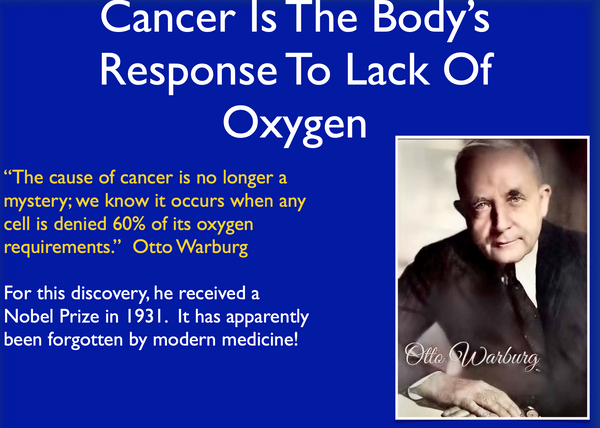
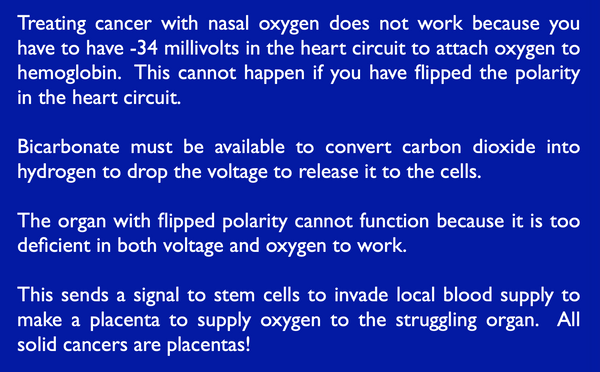
Tennant connects healthy cellular voltage with oxygen availability and cellular metabolism. Within his model, declining voltage is associated with increasingly dysfunctional tissue and an environment more favorable to chronic disease.
He uses approximately -20 to -25 mV as a reference range for normal cellular function and discusses substantially higher voltage requirements during tissue repair. Those numbers are part of Tennant’s Healing Is Voltage teaching. They should not be read as universal clinical thresholds for every cell type, tissue, or cancer question.
Established physiology gives us a useful companion perspective. In oxidative phosphorylation, electrons move through mitochondrial electron-transport complexes to oxygen, the terminal electron acceptor. That process pumps protons across the inner mitochondrial membrane, creating an electrochemical gradient that helps drive ATP production. Mitochondrial membrane potential, plasma-membrane potential, tissue bioelectric fields, and a generalized idea of “body polarity” are not the same measurement.
The statement “cancer does not occur in the presence of oxygen” is not a universal medical statement. Tumor oxygen biology is complex and variable. This page is explaining Tennant’s voltage model while keeping oxygen, mitochondria, membrane potentials, and ATP in their proper physiological context.
What Can Lower Voltage?
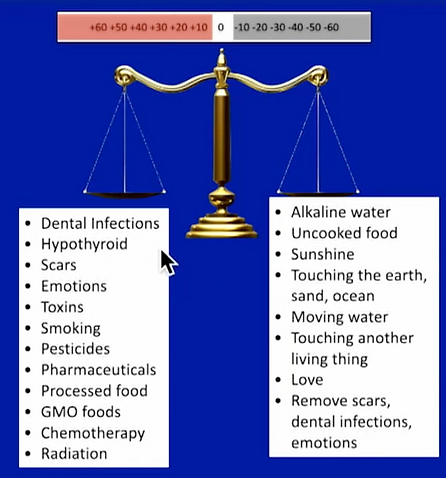
Tennant identifies five major categories that may act like resistance within the body’s electrical circuits:
- Emotions
- Root canals and dental infections
- Scars and tattoos
- Toxins
- Lack of micronutrients
Rather than repeat the entire discussion here, read What Lowers Body Voltage?.
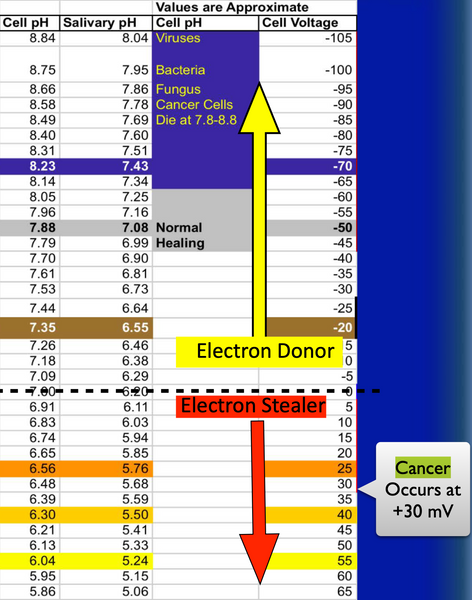
Electron Stealers and Electron Donors
Within Tennant’s terminology, electron stealers are factors that may deplete or interfere with healthy voltage. He associates this category with micronutrient deficiencies, emotional stress, toxins, dental infections, scars, poor nutrition, and environmental exposures.
Electron donors are the things Tennant associates with restoring voltage or supporting electrical balance. This is the natural bridge to the practical question of what you can do next.
Read: Ways to Increase Body Voltage →
How Does Tennant Explain Cancer Recurrence?
Within Tennant’s model, removing a tumor does not necessarily correct the conditions that allowed dysfunctional tissue to develop in that circuit. He therefore emphasizes identifying factors that may continue to interfere with voltage, polarity, cellular repair, and the corresponding meridian.
Tennant also uses the phrase electron stealers for radiation and chemotherapy within his own framework. This article is explaining his terminology, not providing an alternative cancer-treatment plan. Oncology decisions belong with a qualified oncology team.
Dental Infections, Root Canals, and Meridians
Tennant reports that approximately 90% of the cancer patients he evaluated had a root canal. Within his Healing Is Voltage model, he proposes that infected or root-canaled teeth may interfere with electrical function along the acupuncture meridian associated with that tooth, potentially affecting tissues and organs elsewhere along the same circuit.
That is Tennant’s reported observation and model. It is not the same as saying that root canals cause 90% of cancers. The article is not making that causal claim.
The relationship Tennant draws is:
This is an excellent place to explore the tooth and meridian relationships clients often ask about:
Supporting Healthy Voltage
Tennant’s emphasis is on identifying resistance in the circuit and supporting normal voltage, polarity, nutrition, cellular physiology, and the corresponding meridian. That is the lens this article has explored.
It is not a cancer protocol. It is a pathway into the related education that helps explain Tennant’s model:
Questions About Cancer and Polarity
What does polarity mean in the body?
In conventional physiology, cells have measurable electrical membrane potentials. Within Tennant’s Healing Is Voltage model, polarity also describes the electrical direction of a body circuit or meridian and whether it can hold charge normally.
What does Dr. Jerry Tennant say about cancer and voltage?
Tennant connects cancer, chronic disease, voltage, oxygen, polarity, meridians, dental infections, emotions, toxins, scars, and micronutrients within his Healing Is Voltage framework. These are Tennant’s interpretations, not the conventional medical explanation of cancer.
What does oxygen have to do with cellular voltage?
Oxygen is the terminal electron acceptor in mitochondrial oxidative phosphorylation. That process supports ATP production through an electrochemical gradient. Tennant uses oxygen and voltage more broadly within his own cancer-and-polarity model.
What was John Beard’s theory of cancer?
John Beard proposed in 1902 that early invasive trophoblast tissue offered a model for carcinoma and later hypothesized that pancreatic enzymes, especially trypsin, might restrain trophoblast invasion and act against cancer. This was Beard’s historical theory, not established oncology.
What is nagalase?
Nagalase refers to alpha-N-acetylgalactosaminidase activity. Yamamoto studied it in relation to Gc protein, macrophage-activating-factor biology, viruses, immune activity, and cancer. His later cancer-treatment reports are marked as retracted in PubMed.
Why does Tennant compare cancer with placental growth?
Tennant draws on Beard’s historical interest in trophoblast behavior. Placental tissue and cancer can share isolated themes such as invasion, vascular development, oxygen transitions, and immune interactions, but a placenta is not cancer and normal placentation is a timed, regulated process.
What do root canals have to do with meridians?
Within Tennant’s model, a dental infection or root-canaled tooth may interfere with the meridian associated with that tooth. See Body Meridians & Associated Teeth for the reference guide.
What can lower body voltage?
Tennant identifies emotions, dental infections, scars and tattoos, toxins, and lack of micronutrients as major contributors. Read What Lowers Body Voltage? for the full guide.
How can body voltage be supported?
Continue with Ways to Increase Voltage for practical daily approaches, then return to the broader Energy & Voltage education series for the concepts behind them.
Important Context
This article discusses Dr. Jerry Tennant’s Healing Is Voltage model and historical theories that have influenced it. These models are not the conventional medical explanation of cancer and should not be used as a substitute for cancer diagnosis or oncology care.