

How is Ipamorelin dosed?
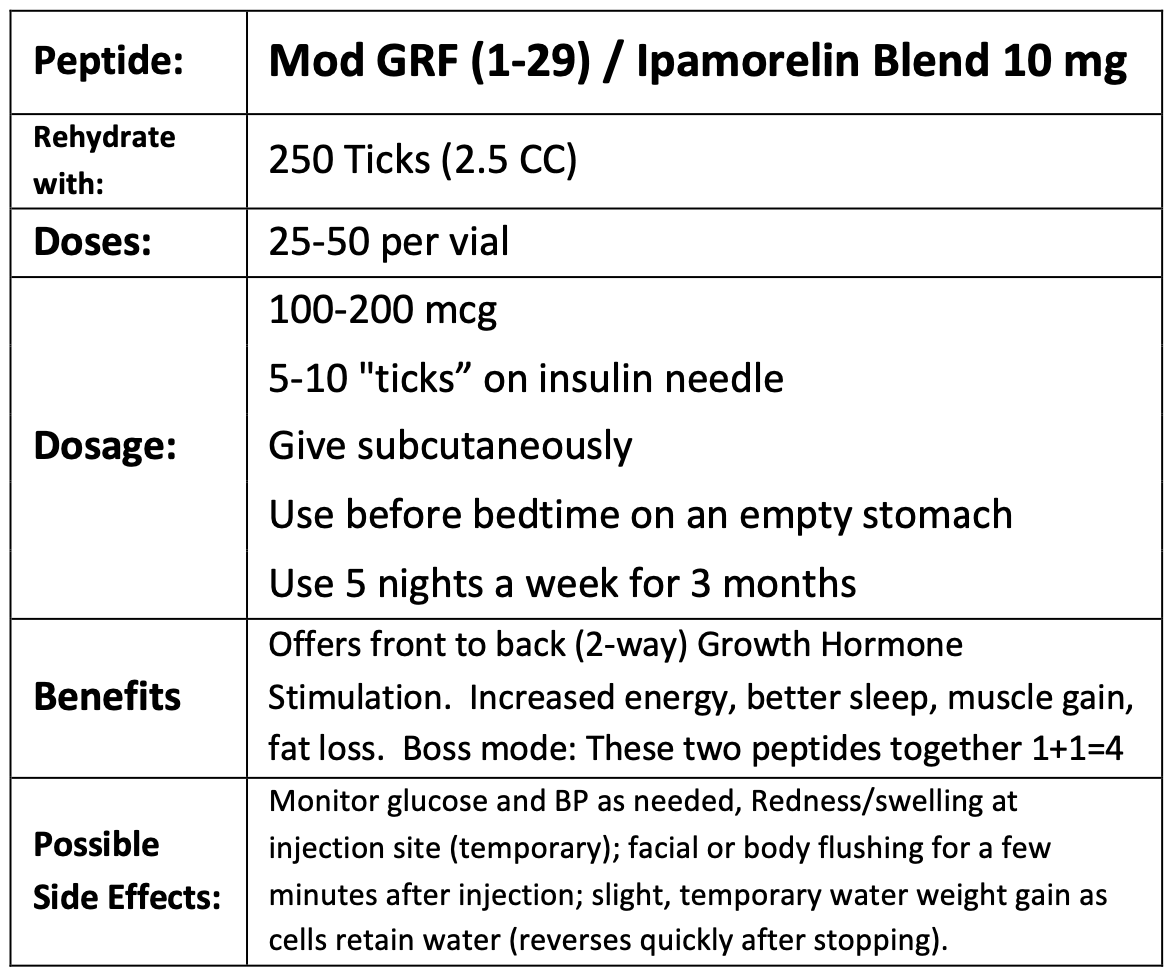
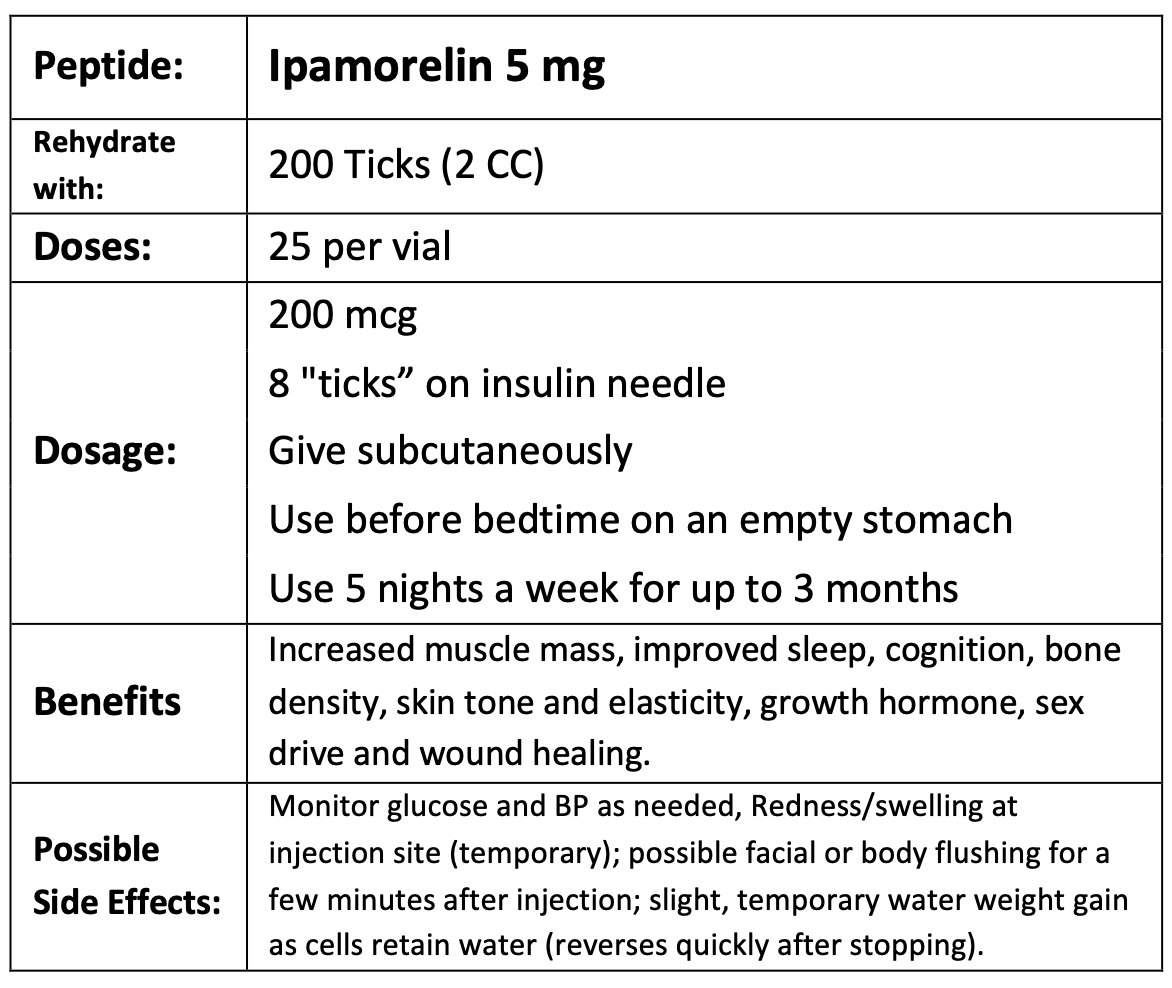
Why before bed, and why empty stomach. Your largest natural growth hormone pulse happens during deep sleep, so dosing before bed works with that rhythm rather than against it. Food, particularly carbohydrate, blunts growth hormone release, which is why an empty stomach matters more here than with most peptides.
Why over 40. Growth hormone production declines with age. In someone in their twenties producing normal amounts, there is far less to restore.
Why the blend rather than either alone. It offers front-to-back, two-way growth hormone stimulation: Mod GRF acts on the growth hormone releasing hormone receptor, ipamorelin on the growth hormone secretagogue receptor. Dawn's own summary: "Boss mode: these two peptides together, 1+1=4."
Reported benefits of the blend: increased energy, better sleep, muscle gain, fat loss.
Why doesn't it shut down your own production?
This is the central argument for growth hormone peptides over growth hormone itself.
If you take exogenous growth hormone, you shut down your own production. Your body detects adequate levels and stops making its own.
Growth hormone peptides operate within the proper feedback loops. They ask the pituitary to release more of what it already makes. The signalling pathway stays intact.
As Dawn puts it: as we age, our pituitary gland still produces GH, but the rest of our body forgets to ask for it. Ipamorelin does the asking.
One qualification. The original states this means no negative long-term effects. That is the rationale, and it is a sound one, but it is a mechanistic argument rather than a demonstrated outcome. Long-term human data on GHRPs is limited. Preserving the feedback loop is a genuine advantage over exogenous GH; it is not the same as a proven long-term safety record.
What is ipamorelin?
A growth hormone releasing peptide (GHRP).
It activates the ghrelin receptor at the pituitary gland, which blocks the inhibitory effect of somatostatin and increases growth hormone secretion. Somatostatin is the brake; ipamorelin releases it.
It also boosts production of IGF-1, insulin-like growth factor 1, which plays a key role in the growth and repair of muscular and skeletal tissue.
Its distinguishing feature: it does not affect prolactin or cortisol. Several older GHRPs do, which is why ipamorelin is generally considered the cleaner option in this class.
What is growth hormone actually for?
GH helps improve bone density, stop muscle wasting, decrease visceral fat, and increase metabolism. It may also improve deep sleep, increase energy, offset the effects of steroids, improve skin elasticity, and improve heart health.
Production declines steadily with age, which is the entire rationale for this category.
Reported benefits
- Increased muscle mass
- Improved sleep
- Enhanced cognition, focus and memory
- Improved wound healing and injury repair
- Increased bone density
- Increased sex drive
- Strengthened immune system
- Optimised cardiovascular system
- Improved skin tone
Particularly noted for women, to restore skin elasticity, deep wave sleep, and fat loss.
What does it combine with?
| Combination | Why |
|---|---|
| MOD GRF (1-29) | Hits the growth hormone releasing hormone receptor while ipamorelin hits the growth hormone secretagogue receptor. Two different receptors, one outcome. |
| Tesamorelin | Effective muscle-building combination |
The MOD GRF pairing is the one most often described as synergistic, because the two compounds approach the same result through separate pathways.
Side effects
- Tiredness
- Water retention, as cells retain water. Reverses quickly after stopping.
- Tingling in hands and feet
- Temporary irritation, redness, swelling or lumps at the injection site
- Facial or body flushing for a few minutes after each injection
Monitor glucose and blood pressure as needed. This appears on Dawn's own dosing table and is worth taking seriously rather than reading as boilerplate.
Because ipamorelin activates the ghrelin receptor, increased appetite is a common report. Anyone managing weight should expect it rather than be surprised by it.
Raising IGF-1 also matters in two situations: active or previous cancer, since IGF-1 promotes cell growth, and diabetes or insulin resistance, since growth hormone affects glucose handling. Both warrant a physician's involvement before starting.
Do your own research.
Sourcing and quality
Peptides sold outside compounding pharmacies are labelled "Not For Human Consumption and For Research Use Only." Always ask for batch-specific third-party testing for quality, purity and content. If it is not available, go elsewhere.
VIGEO Health does not sell injectable peptides. Third-party vendors can be recommended on request: email dawn@vigeohealth.net.
Competitive athletes: growth hormone releasing peptides are prohibited by WADA. Check the current list. The responsibility is yours.
Test your foundations first
Growth hormone tells tissue to build. Building consumes minerals: zinc, magnesium, and the cofactors that drive protein synthesis and bone formation. Signalling for construction with the materials missing produces a disappointing result.
Sleep quality is the other input. Ipamorelin works with your natural sleep-linked GH pulse, so it does considerably less for someone sleeping five broken hours a night.
See what the OligoScan measures
What this page does not tell you
- Ipamorelin is not an approved medication. It is sold as a research compound, outside pharmaceutical manufacturing standards.
- Long-term human data is limited. The feedback loop argument is mechanistically sound but is not a substitute for long-term safety evidence.
- IGF-1 elevation is not neutral for everyone. Anyone with a cancer history should discuss this with their oncologist before considering it.
- Growth hormone affects glucose metabolism, which matters for diabetics and anyone insulin resistant.
- Not appropriate in pregnancy.
- Prohibited in tested sport.
References and further reading
- Greenfield, Ben. Growth hormone releasing peptides. bengreenfieldlife.com
- Literature on GHRP mechanism, somatostatin inhibition and IGF-1 response.
- VIGEO Health Medical Disclaimer
Related peptides
- MOD GRF (1-29) — the synergistic pairing
- Tesamorelin — the muscle-building combination
- All peptides
Questions and Answers
Q: How is ipamorelin dosed? A: Five days on and two days off per week, for up to several months, taken right before bed on an empty stomach. A vial provides 20 to 40 doses. Bedtime dosing works with the body's largest natural growth hormone pulse, which occurs during deep sleep, and food blunts growth hormone release.
Q: Does ipamorelin shut down your own growth hormone production? A: No, and that is the main argument for growth hormone peptides over growth hormone itself. Taking exogenous growth hormone causes the body to stop producing its own. Ipamorelin instead signals the pituitary to release more of what it already makes, so the natural feedback loop remains intact.
Q: What is ipamorelin and how does it work? A: A growth hormone releasing peptide. It activates the ghrelin receptor at the pituitary gland, which blocks the inhibitory effect of somatostatin and increases growth hormone secretion. It also raises IGF-1. Unlike several older peptides in its class, it does not affect prolactin or cortisol.
Q: What does ipamorelin combine well with? A: MOD GRF (1-29) is the most commonly described pairing, because it acts on the growth hormone releasing hormone receptor while ipamorelin acts on the growth hormone secretagogue receptor, reaching the same outcome through two separate pathways. It is also combined with tesamorelin for muscle building.